




![Popular Small-Size Actress Aunty Ajara Dies After Liver Illness [VIDEO]](https://thepunchng.com/wp-content/uploads/2026/02/20241109_125042-75x75.jpg)


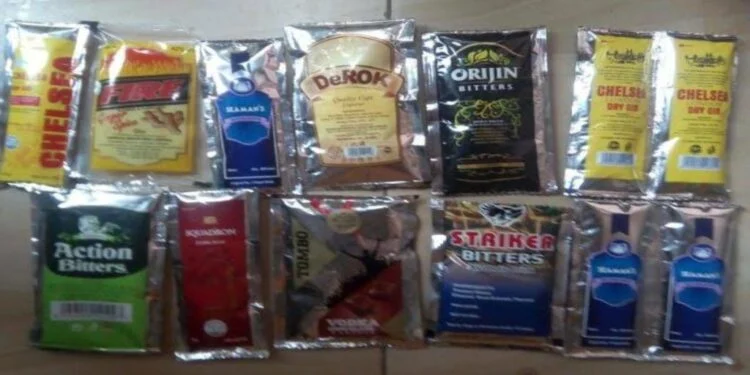
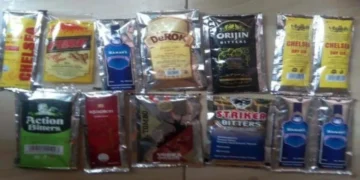
The National Agency for Food and Drug Administration and Control (NAFDAC) has explained its decision to enforce a ban on alcoholic beverages sold in sachets and in PET or glass bottles smaller than 200ml, citing serious public health concerns—especially for children.
In a video shared on NAFDAC’s X handle on Tuesday, Director-General Prof. Mojisola Adeyeye addressed the media, stressing that the ban targets the protection of minors, not adults.
Protecting Children from Early Exposure
Prof. Adeyeye clarified the reasoning behind the ban:
“I’m not opposed to the use of alcohol by adults. Adults’ bodies are developed enough to handle alcohol. But children are not small adults. Their systems are still developing, and exposure to alcohol can cause serious and lasting damage.”
She explained that children consuming alcohol early risk harming physiological systems that are not yet mature enough to process it.
Dangerously High Alcohol Concentration
The Director-General also highlighted the high alcohol content in sachets:
“Some sachets contain up to 43% alcohol. To put this in perspective, drinking just two sachets is equivalent to consuming ten times the amount of alcohol in beer, which is around 6–8%.”
Timeline and Enforcement
Prof. Adeyeye outlined the history of the ban:
- 2017: NAFDAC joined NABLAC (National Alcohol Beverage Licensing and Control) and initially focused on reducing alcohol concentration rather than banning it outright.
- 2018: The Ministry of Health issued a five-year moratorium to allow companies to adjust business plans while considering public safety.
- 2024: Enforcement began on February 1 but was paused for consultations.
- 2025: Following an extension to December 2025, the ban is now fully enforced.
“All relevant stakeholders—including NABLAC, the Ministry of Health, D-BAN, and AFBT—signed off on the plan to ensure that alcohol in sachets or bottles under 200ml would no longer be available,” Prof. Adeyeye said.
Risks for Adults
While the ban primarily targets children, adults are not completely safe from harm:
“Even for adults, consuming alcohol unsafely—such as during work—can be dangerous. Sachets make it alarmingly easy to access high-strength alcohol.”
Public Reaction
The enforcement follows a November 11, 2025 announcement to implement the ban by December 2025, in line with a Senate directive. However, civil society groups and employees of companies producing sachet alcohol protested, warning that over five million Nigerians could be affected economically.
Grounded in Science and Global Best Practices
Prof. Adeyeye emphasised that the ban aligns with international standards:
“The World Health Assembly in 2010 recommended that all countries make alcohol inaccessible to children. Nigeria, along with 183 other countries, agreed to this. Children cannot handle alcohol like adults. Their organs are still growing. Adults can make their own choices, but children must be protected.”
Key Takeaway
NAFDAC’s ban on sachet alcohol is a child-protection measure, grounded in science, global best practices, and years of stakeholder consultations. Prof. Adeyeye’s message is clear: “Children cannot handle alcohol the way adults can. That is why we are enforcing this ban.”