




![Popular Small-Size Actress Aunty Ajara Dies After Liver Illness [VIDEO]](https://thepunchng.com/wp-content/uploads/2026/02/20241109_125042-75x75.jpg)



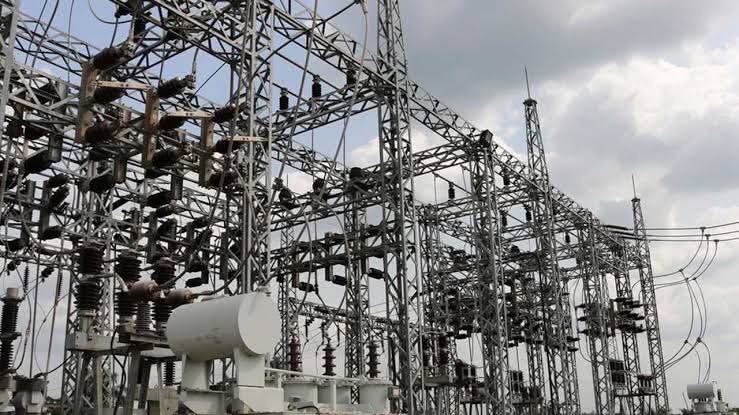
Electricity supply has been fully restored across Nigeria following a partial collapse of the national power grid on Monday, the Nigerian Independent System Operator (NISO) has confirmed.
According to NISO, the system disturbance occurred at exactly 2:01 pm on Monday, December 29, 2025, triggering widespread power outages in several parts of the country.
What Happened
Data obtained by our correspondent showed that power generation, which peaked at about 4,800 megawatts earlier in the day, plummeted sharply to 139MW by 3:00 pm following the disturbance.
In a statement issued Monday night and signed by its management, NISO explained that the incident led to the tripping of multiple power generation units and critical 330kV transmission lines, further weakening the already fragile national grid.
“The National Grid experienced a system disturbance at 14:01 hours on Monday, 29 December 2025, which resulted in a partial collapse,” NISO said.
“Preliminary reports indicate that the disturbance involved the tripping of several generating units and critical 330kV transmission lines, leading to widespread disruption of electricity supply.”
Gas Supply Challenges Worsened Situation
The latest grid setback comes amid ongoing gas supply challenges following the vandalisation of the Escravos–Lagos gas pipeline on December 10, 2025. The damage significantly reduced gas availability to thermal power plants, forcing several generation companies to cut output.
NISO noted that the gas constraints further exposed long-standing structural weaknesses in the national grid, making it more vulnerable to system disturbances.
“This has further contributed to the fragility and weakness of the national grid,” the operator stated.
Delta Plant Operated in Island Mode
Despite the widespread outage, NISO disclosed that the Delta Generation Complex successfully isolated itself from the national grid and continued operating in island mode at the 132kV sub-transmission voltage level.
This intervention ensured uninterrupted electricity supply to Oghara, Amukpe, Benin, and Efunrun 132kV substations, with a total output of 114 megawatts from four units at the Delta Thermal Power Station.
Emergency Measures and Restoration
NISO said it immediately activated emergency response measures in line with established operational procedures, using its dispatch and monitoring tools at the National Control Centre in Osogbo.
After hours of coordinated recovery efforts, the operator confirmed that electricity supply had been fully restored nationwide.
“Supply has been fully restored to all parts of the country and system stability has been normalised,” NISO said.
Investigation Ongoing
The system operator added that investigations were ongoing to determine the exact cause and sequence of events that led to the partial collapse, assuring Nigerians that corrective measures would be implemented to prevent a recurrence.
“Appropriate measures shall be put in place to forestall future recurrence of such major system incidents,” the statement noted.
A Recurring Challenge
Grid collapses and system disturbances remain a persistent challenge in Nigeria’s power sector, often linked to gas shortages, weak transmission infrastructure, and operational constraints.
Since the unbundling of the power sector, successive administrations have pledged reforms aimed at stabilising the grid, improving gas supply to power plants, and strengthening transmission capacity.
NISO, which recently assumed system operation responsibilities following sector reforms, reaffirmed its commitment to proactive grid management.
“NISO reassures Nigerians of its continued commitment to proactive grid management and the application of best operational practices to ensure the stability and reliability of the National Grid,” the statement concluded.