




![Popular Small-Size Actress Aunty Ajara Dies After Liver Illness [VIDEO]](https://thepunchng.com/wp-content/uploads/2026/02/20241109_125042-75x75.jpg)



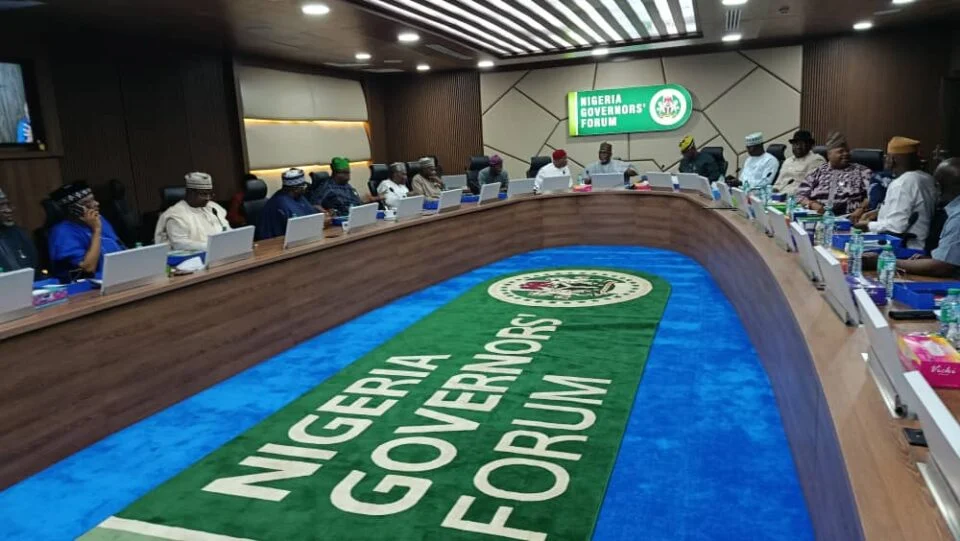
State governments across Nigeria earmarked a combined ₦525.23 billion for security votes and related operations between 2023 and 2025, according to an analysis of approved budget documents.
The figures, extracted from state budgets published on Open States—a BudgIT-backed platform that tracks public finance—raise serious concerns about the effectiveness of security spending, as violent attacks, kidnappings, and communal clashes continue unabated across the country.
Rising Security Votes, Lingering Insecurity
Despite the substantial allocations, Nigerians remain increasingly exposed to insecurity. While the Federal Government bears the constitutional responsibility for protecting lives and property, the surge in violent crime has pushed many governors to develop independent security strategies funded through security votes.
However, critics argue that these measures have failed to deliver meaningful results, with criminals continuing to operate with little restraint.
The analysis covered 32 states, as Gombe, Kebbi, Niger, and Yobe did not clearly disclose their security vote allocations. In addition, Ekiti State’s 2025 budget lacked a clear breakdown, suggesting that the true national total may exceed ₦525.23bn.
Year-by-Year Breakdown
Security vote allocations have grown steadily over the three-year period:
- 2023: ₦150.47bn
- 2024: ₦164.07bn (↑ 9.04%)
- 2025: ₦210.68bn (↑ 28.4%)
Compared with 2023, the amount budgeted in 2025 rose by over ₦60bn, representing a 40.01% increase within just three fiscal years.
States with the Highest Security Spending
A handful of states accounted for a significant portion of the total:
- Borno: ₦57.40bn
- Anambra: ₦42.57bn
- Delta: ₦38.44bn
- Benue: ₦36.87bn
- Ondo: ₦31.72bn
- Zamfara: ₦31.40bn
- Edo: ₦29.21bn
Borno’s leading position reflects the sustained cost of counterinsurgency operations in the North East, while Anambra recorded one of the sharpest increases, rising from just ₦184.9m in 2023 to ₦25.10bn in 2025.
At the lower end, Rivers disclosed only ₦210m over three years, Akwa Ibom reported ₦624m, and Ekiti disclosed just ₦3.1m, highlighting stark disparities in reporting and prioritisation.
Shifting Patterns Across the Years
- 2023: Bauchi led with ₦17.39bn, followed by Delta (₦17.15bn) and Bayelsa (₦11.12bn).
- 2024: Zamfara topped the list with ₦17.40bn, narrowly ahead of Anambra and Borno.
- 2025: Spending widened dramatically, with Borno allocating ₦32.83bn, far above other states.
Some states showed sharp fluctuations. Bauchi’s allocation plunged from ₦17.39bn in 2023 to ₦12.8m in 2024 before rebounding to ₦8bn in 2025. Kano followed a similar pattern, while Ogun and Anambra recorded steady and significant increases.
Regional Breakdown
- North East: ₦113.78bn (highest), driven largely by Borno
- South East: ₦102.59bn, boosted by Anambra’s surge
- South South: ₦98.36bn, led by Delta, Edo, and Bayelsa
- North Central: ₦76.57bn
- North West: ₦70.77bn
- South West: ₦63.16bn (lowest), though spending spiked sharply in 2025 due to Oyo and Ondo
Transparency Concerns Over Security Votes
In Nigeria, security votes are special funds reserved for sensitive operations such as intelligence gathering and emergency responses. Their spending is often shielded from public scrutiny, a practice that has long drawn criticism.
Analysts argue that rather than improving safety, the opaque nature of security votes allows them to function as political slush funds.
Voices of Concern
The National Coordinator of the Coalition of Northern Groups, Jamilu Charanchi, questioned the rationale behind the huge allocations.
“What is a security vote? What are they doing with it? Don’t we still have killings in the North? Bad roads? Dilapidated hospitals?” he asked, arguing that poverty and poor governance fuel insecurity.
President Bola Tinubu, speaking at a security conference, also stressed that effective governance at the state and local levels is critical to tackling insecurity, noting that weakened local governments have left communities vulnerable.
Similarly, organised labour has urged subnational governments to translate security funding into tangible results. The Nigeria Labour Congress (NLC) warned in December 2025 that worsening insecurity is eroding livelihoods and restricting movement.
“States and local governments receive security allocations. Nigerians deserve to see concrete results,” said Comrade Funmi Sessi, Chairperson of the NLC Lagos Chapter.
Her deputy, Comrade Olapisi Ido, added:
“People are dying daily. The question Nigerians are asking is simple: what are they using the money for?”