




![Popular Small-Size Actress Aunty Ajara Dies After Liver Illness [VIDEO]](https://thepunchng.com/wp-content/uploads/2026/02/20241109_125042-75x75.jpg)



Africa’s democratic landscape faced significant strain in 2025, marked by disputed elections, deadly protests, and the continued rise of military rule across parts of the continent. From East Africa to the Sahel, the year exposed widening gaps between citizens and those in power — raising concerns that democratic gains of recent decades may be at risk.
Tanzania’s Election Shock
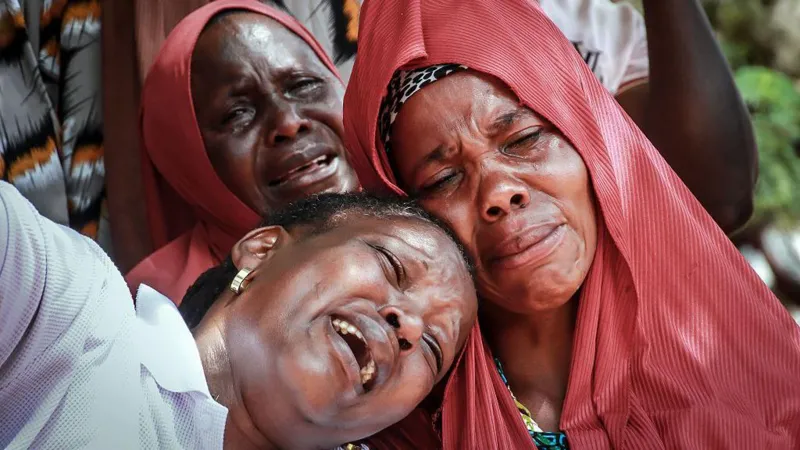
October’s events in Tanzania offered a stark illustration of the pressures shaping African politics. Protesters were shot dead by police while demonstrating against what they believed was a rigged election — an outcome condemned by both regional and continental bodies.
With opposition candidates imprisoned or barred from contesting, President Samia Suluhu Hassan was re-elected with 98% of the vote. The violence shattered Tanzania’s long-standing reputation for peace and stability, and any earlier signs of democratic openness appeared abruptly reversed.
Analysts argue that Tanzania’s crisis reflects a broader breakdown in trust between African governments and their citizens.
A Continent Under Strain
Several African countries experienced protests and contested elections in 2025, while military leaders consolidated power elsewhere. Many analysts warn that further instability may lie ahead.
“If we look at the overall picture across the continent, the trend is worrying,” said Mo Ibrahim, founder of the Mo Ibrahim Foundation, which tracks governance across Africa.
The foundation’s latest report shows that progress on governance — including security, citizen participation, health, and education — has stalled compared to the decade before 2022.
“The increase in coups, the return of military governments, and the closing of democratic space all point to the same problem: a failure of governance,” Mr Ibrahim said.
Rising living costs have often been the immediate trigger for unrest. While inflation is a global issue, Mr Ibrahim warned that Africa faces a particular risk if negative trends continue unchecked, potentially undoing years of hard-won progress.
Signs of Democratic Resilience
Despite the challenges, 2025 also produced some encouraging democratic outcomes.
In Malawi, former president Peter Mutharika returned to office after a period in opposition. Seychelles saw the long-ruling United Seychelles party regain power five years after losing it. In both cases, incumbent governments were punished by voters over their handling of inflation.
These results followed setbacks for ruling parties in 2024. In South Africa, the African National Congress lost its parliamentary majority for the first time since 1994, forcing it into a power-sharing arrangement. In Senegal, street protests and court rulings blocked attempts by the president to extend his tenure, paving the way for the election of a relatively unknown candidate after the main opposition leader was barred.
The Rise of Military Rule in the Sahel
Elsewhere, democracy continued to erode — particularly in West Africa’s Sahel region.
Mali, Niger, and Burkina Faso, all ruled by military governments following coups, withdrew from the regional bloc Ecowas and formed a new alliance. Their actions underscored the growing influence and confidence of military leaders across the region.
By the end of 2025, eight African countries were under military rule following another coup in Guinea-Bissau. An attempted coup in Benin, however, prompted a swift response from Ecowas — a sign that regional bodies may be regaining resolve after earlier failures to deter military takeovers.
Youth, Demographics, and Protest Politics
Africa remains the world’s youngest continent, yet many of its leaders are among the oldest. This demographic imbalance is increasingly fuelling unrest, amplified by social media and rising political awareness among young people.
In Cameroon, where the average age is just over 18, President Paul Biya — 92 and in power for 43 years — was sworn in for an eighth term following elections critics described as neither free nor fair. Though authorities rejected the allegations, the result sparked days of protests, signalling growing defiance from a youthful population.
Not all protests ended without consequence. In Madagascar, weeks of youth-led demonstrations over poor service delivery forced President Andry Rajoelina to sack his cabinet. The unrest eventually culminated in a coup that removed him from power, with the military installing a former officer as interim president.
While coups represent setbacks for democracy, some analysts argue they also reflect a failure by civilian leaders to respond to public demands.
Broken Social Contracts
Many experts believe protests will become an increasingly common feature of African politics.
“We’re seeing broken social contracts,” said Nerima Wako, executive director of Kenya-based civic group Saisa. “Young people are demanding access to health, water, and opportunity — things governments are meant to provide.”
According to Adem Abebe of the International Institute for Democracy and Electoral Assistance, public dissatisfaction is deepening.
“People are less satisfied with what they’re getting. There’s growing anger over shrinking political freedoms and weak service delivery,” he said.
He also noted that shifting global geopolitics have given African governments greater room to slide toward authoritarianism, as Western powers focus on crises elsewhere and pursue more transactional relationships.
An Uncertain Road Ahead
With elections looming in countries such as Uganda — ruled for four decades by President Yoweri Museveni — concerns remain high about the future of democratic governance on the continent.
For Mo Ibrahim, the path forward depends on how leaders respond to Africa’s youth.
“Africa’s youth has become its demographic majority,” he said. “This must translate into democratic practice.”
“If governments listen to them, invest in them, and respect their rights, the coming years could mark a real turning point.”
But the warning is clear: those who fail to adapt may not endure.
“We’ve entered a new dispensation in the relationship between people and power,” said Ms Wako. “The governments that understand this quickly will be the ones that survive.”