




![Popular Small-Size Actress Aunty Ajara Dies After Liver Illness [VIDEO]](https://thepunchng.com/wp-content/uploads/2026/02/20241109_125042-75x75.jpg)



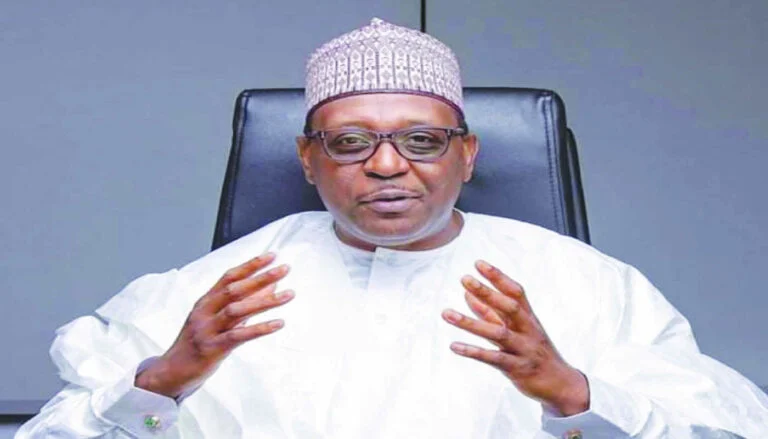
The Federal Government has administered more than 25 million doses of measles vaccines and 22 million yellow fever vaccinations across Nigeria, the Coordinating Minister of Health and Social Welfare, Prof. Muhammad Pate, has said.
Pate disclosed this on Sunday via a broadcast on his official X (formerly Twitter) handle, highlighting major gains in immunisation coverage and preventive healthcare delivery under the current administration.
“Under this administration, over 25 million measles doses and 22 million yellow fever vaccinations have been administered, alongside Africa’s first Mpox vaccine rollout,” the minister said.
Expanded Immunisation Coverage
Beyond measles and yellow fever, Pate revealed that five million children have received the pentavalent vaccine, while over 10 million Nigerians were vaccinated with the tetanus-diphtheria vaccine as part of the nationwide diphtheria response.
He added that more than one million vaccine doses from the Gavi-funded global stockpile were deployed to support meningitis outbreak control, particularly in northern parts of the country.
Nigeria Introduces First Malaria Vaccine
The minister described the introduction of Nigeria’s first-ever malaria vaccine as a historic milestone in public health.
“As the country with the world’s highest malaria burden—accounting for about 39.3 per cent of malaria-related deaths among children under five—the deployment of the R21 Matrix-M vaccine marks a major breakthrough,” Pate said.
According to him, the rollout began in Bayelsa and Kebbi states, with Kebbi alone targeting 179,542 children aged five to 15 months.
Nigeria has so far received one million doses of the malaria vaccine, comprising 846,200 doses from Gavi and 153,800 doses funded by the Federal Government, with plans to scale up distribution nationwide.
Global Leadership in Disease Control
Pate noted that Nigeria is increasingly being defined not only by its disease burden but also by its leadership in domestic resource mobilisation and global disease control.
He disclosed that in 2025, the Federal Government committed $54 million in domestic resources to the global fight against tuberculosis, emerging as Africa’s largest contributor to the Global Fund, as announced at the most recent G20 meeting in Johannesburg.
“These gains are substantive,” the minister said.
He attributed the progress to sustained increases in health-sector financing across all levels of government, covering primary healthcare infrastructure, workforce development, and vaccination campaigns, which have reinforced global confidence in Nigeria’s health system.
HPV Vaccination and Cervical Cancer Elimination
Pate also highlighted Nigeria’s drive to eliminate cervical cancer, noting that although about 12,000 Nigerian women are diagnosed annually, the disease is largely preventable through early Human Papillomavirus (HPV) vaccination.
Since the launch of the HPV vaccination programme in October 2023 across 15 states and the Federal Capital Territory, over 14 million girls aged nine to 14 years have been vaccinated—representing more than 90 per cent coverage, he said.
Increased Funding and Health Service Utilisation
The minister disclosed that formal approval has been granted for an additional ₦68 billion for vaccine financing and related needs, with the funds lodged at the National Primary Health Care Development Agency and scheduled for release.
He said the achievements reflect deliberate reforms and stronger coordination through the Sector-Wide Approach, aligning federal, state and local governments with development partners and non-governmental organisations.
Pate added that President Bola Tinubu’s Renewed Hope Agenda places human development at the centre of governance, alongside economic reform and infrastructure investment.
According to him, improved confidence in the health system has led to a sharp rise in service utilisation nationwide.
“In the second quarter of 2024, health facilities recorded about 10 million visits. By the second quarter of 2025, visits exceeded 45 million—more than a fourfold increase,” he said.
The minister explained that the increase reflects greater access to essential and life-saving services, particularly immunisation, among Nigeria’s youthful population, previously limited by misinformation, distrust and access barriers.
He reaffirmed the administration’s commitment to ensuring that preventable illnesses and avoidable deaths no longer hinder Nigerians from living healthy, productive and dignified lives.