




![Popular Small-Size Actress Aunty Ajara Dies After Liver Illness [VIDEO]](https://thepunchng.com/wp-content/uploads/2026/02/20241109_125042-75x75.jpg)



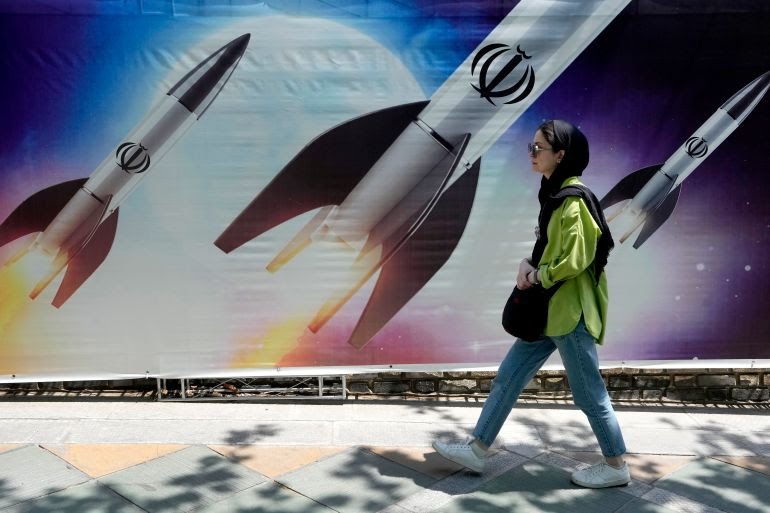
US president says Washington would back attacks if Tehran rebuilds nuclear or missile programmes
Iran has issued a sharp warning to the United States following renewed threats by President Donald Trump, vowing a “severe and regret-inducing” response to any future military aggression.
President Masoud Pezeshkian made the statement on Tuesday, a day after Trump hosted Israeli Prime Minister Benjamin Netanyahu at his Mar-a-Lago estate in Florida. During the meeting, Trump reiterated strong support for Israel and warned that Washington would not hesitate to strike Iran again if it resumes its nuclear or missile programmes.
Trump escalates rhetoric
Speaking to reporters alongside Netanyahu, Trump said the US was monitoring Iran closely and would respond forcefully if Tehran attempts to rebuild its military capabilities.
“Now I hear that Iran is trying to build up again, and if they are, we’re going to have to knock them down,” Trump said. “We’ll knock the hell out of them.”
Trump added that he would support immediate strikes on Iran’s nuclear facilities and missile infrastructure if Tehran continues developing long-range weapons.
The remarks marked a notable escalation, as Washington has historically focused on Iran’s nuclear programme rather than its missile capabilities — an area Israel has long sought to bring under international pressure.
Iran rejects missile negotiations
Iran has consistently maintained that its nuclear activities are strictly for civilian purposes. Prior to the June conflict, neither US intelligence agencies nor the United Nations nuclear watchdog found evidence that Tehran was pursuing nuclear weapons.
Tehran has also ruled out any negotiations over its missile programme, describing it as a core element of national defence.
The latest exchange has raised fears of renewed conflict, only months after a devastating 12-day war in June that killed more than 1,100 people in Iran and left 28 dead in Israel.
Fallout from the June war
During the conflict, Israel carried out nearly 360 strikes across 27 Iranian provinces, according to conflict monitoring group ACLED. The attacks targeted military installations, nuclear facilities and government buildings, killing more than 30 senior military commanders and at least 11 nuclear scientists.
Israeli officials estimate that around 1,000 Iranian ballistic missiles were destroyed.
Iran, in turn, fired more than 500 missiles at Israel, with at least 36 landing in populated areas.
Despite Trump’s claim that Iran’s nuclear capabilities were “completely obliterated”, experts dispute that assessment, saying Tehran may have concealed enriched uranium stockpiles and could resume production within months.
Rising regional tensions
Israeli officials have recently voiced concerns that Iran is quietly rebuilding its ballistic missile arsenal.
“If the Americans do not reach an agreement with the Iranians that halts their ballistic missile program, it may be necessary to confront Tehran,” an Israeli official told Ynet.
Pezeshkian has described the current standoff as a “full-scale war” involving the US, Israel and Europe — one he said is more complex than Iran’s eight-year war with Iraq in the 1980s, which claimed over one million lives.
Iran projects strength
Despite the scale of the damage, Iranian leaders insist the country has emerged stronger. In a recent interview, Pezeshkian said Iran’s armed forces are now better prepared, with improved equipment and manpower.
The conflict also failed to trigger the internal unrest that Israeli leaders were believed to be anticipating. No major protests emerged, and daily life in Tehran largely continued despite the bombardment.