




![Popular Small-Size Actress Aunty Ajara Dies After Liver Illness [VIDEO]](https://thepunchng.com/wp-content/uploads/2026/02/20241109_125042-75x75.jpg)



Key contests in Georgia, Michigan, Minnesota, Iowa, and North Carolina may determine control of the U.S. Senate
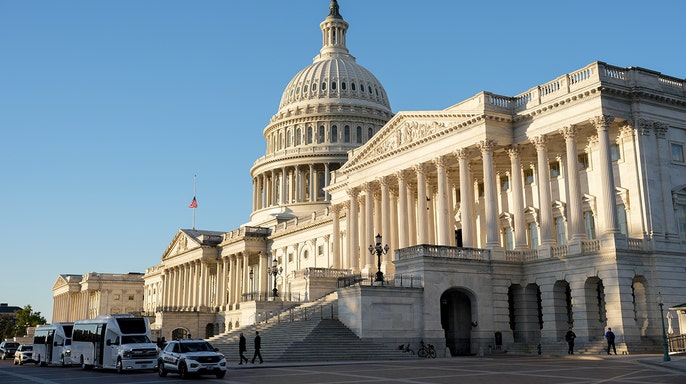
The balance of power in Washington will be on the line in the 2026 midterm elections, as a small group of competitive Senate races could decide whether President Donald Trump and Republicans maintain their governing trifecta — control of the White House, Senate, and House.
Beyond their immediate electoral stakes, these races are also shaping up as broader tests of where American politics — and both major parties — are headed after the 2024 election.
Below are five Senate contests likely to play an outsized role in determining control of Congress.
5. Georgia: Ossoff Faces Tough Re-Election Test
Sen. Jon Ossoff (D-Ga.) enters 2026 facing one of the most competitive races in the country. Georgia narrowly backed President Trump by 2.2% in 2024, underscoring the state’s swing-status.
Ossoff will need to defend his record, including Democrats’ role in a prolonged government shutdown that hit Georgia’s airline-heavy economy particularly hard. While he supported partial relief for federal workers, he opposed the final spending package that ended the shutdown.
Ossoff last won office in a 2021 runoff by just 1.2%, defeating Republican David Perdue. That narrow margin has encouraged a crowded GOP field, including Reps. Buddy Carter and Mike Collins.
Georgia primary: May 19, 2026
4. Michigan: A Test of the Democratic Brand
Michigan’s open Senate race, triggered by the retirement of Sen. Gary Peters, may become a defining moment for Democrats as they debate the party’s ideological direction.
On the Democratic side, a competitive primary has emerged between:
- Abdul El-Sayed, a progressive pushing Medicare-for-All and tougher regulations on large corporations
- State Sen. Mallory McMorrow and Rep. Haley Stevens, both viewed as more moderate alternatives
Republicans have sought to frame El-Sayed as emblematic of a broader leftward shift in the Democratic Party.
The GOP field includes several newcomers, though former Rep. Mike Rogers, who served in Congress from 2001 to 2015, stands out as the most experienced candidate.
Michigan primary: August 4, 2026
3. Minnesota: Fraud Fallout Creates GOP Opening
The retirement of Sen. Tina Smith (D-Minn.) presents Republicans with a rare opportunity in Minnesota, a state increasingly in the national spotlight over major fraud scandals.
Smith won re-election in 2020 with just 48.8%, aided by a third-party candidate who captured nearly 6% of the vote. That dynamic may not repeat in 2026, potentially reshaping the race.
Republicans have attracted a large field, including Royce White, a former NBA player. On the Democratic side, the contest is shaping up between:
- Rep. Angie Craig, backed by party establishment figures
- Lt. Gov. Peggy Flanagan, a leading progressive voice
The outcome could reveal whether Minnesota Democrats pivot toward moderation or embrace a more progressive path.
Minnesota primary: August 10, 2026
2. Iowa: Open Seat Raises Stakes
Republicans were caught off guard when Sen. Joni Ernst (R-Iowa) announced she would not seek re-election. Ernst last won by 6.5% in 2020 — a respectable margin, but one that leaves the open seat vulnerable.
Iowa backed Trump by 13.3% in 2024, giving Republicans confidence, but Democrats see an opening without an incumbent on the ballot.
Declared candidates include:
- Rep. Ashley Hinson and several GOP state lawmakers
- Democrats State Sen. Zach Wahls and State Rep. Josh Turek
This race could determine whether Democrats can make inroads in a state that has trended increasingly Republican.
Iowa primary: June 2, 2026
1. North Carolina: The Likeliest Senate Battleground
North Carolina’s open Senate seat, following the retirement of Sen. Thom Tillis (R-N.C.), may be the most consequential race of the cycle.
The likely matchup pits:
- Michael Whatley, former RNC chair and seasoned GOP strategist
- Roy Cooper, former Democratic governor with a long record of statewide victories
While Whatley has never held elected office, he played a key role in Republicans’ 2024 successes. Cooper, meanwhile, has never lost an election and is known for winning over independent and moderate voters.
With a Democratic governor and a state that voted for Trump in 2024, North Carolina is expected to be decided by razor-thin margins.
North Carolina primary: March 3, 2026
The Big Picture
With control of the Senate potentially hinging on just a handful of races, the 2026 midterms could define the trajectory of Trump’s second term — or bring unified government to a halt. These contests won’t just decide Senate seats; they’ll shape the future direction of both parties heading into the next decade.