




![Popular Small-Size Actress Aunty Ajara Dies After Liver Illness [VIDEO]](https://thepunchng.com/wp-content/uploads/2026/02/20241109_125042-75x75.jpg)



Western Leaders Move to Strengthen China Ties Amid US Tariff Uncertainty
By Staff Reporter
Western governments are increasingly seeking closer economic engagement with China as uncertainty over United States trade policy—particularly the renewed threat of tariffs under former president Donald Trump—reshapes global alliances.
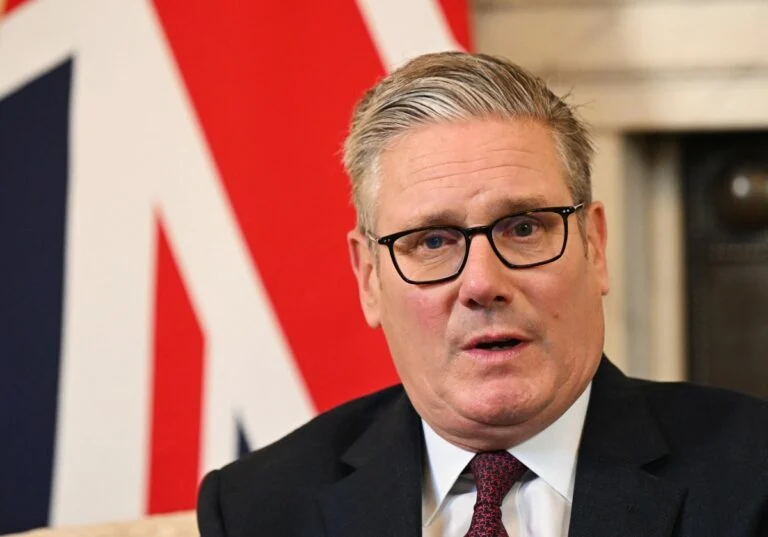
Britain’s Prime Minister Keir Starmer has become the latest Western leader to signal a thaw in relations with Beijing, as analysts point to growing unease over Washington’s unpredictable trade posture.
Starmer’s Beijing Visit Signals Policy Shift
Starmer arrived in Beijing this week to promote what his office described as a “pragmatic” approach to cooperation with China. His visit follows similar diplomatic overtures by leaders from Canada, Ireland, France, and Finland, many of whom are visiting China for the first time in years.
“There is a veritable race among European heads of government to meet with Chinese President Xi Jinping,” said Hosuk Lee-Makiyama, director of the European Centre for International Political Economy.
According to Lee-Makiyama, the renewed engagement is driven by competition among European states to secure investment and market access ahead of upcoming China-US summits scheduled for February and April.
Trade Diversification Beyond the US
China is not the only alternative being explored. Earlier this week, India and the European Union announced a long-awaited trade agreement nearly two decades in the making. The deal aims to unlock new markets amid growing pressure on the global trading system.
Similarly, Vietnam and the EU pledged deeper cooperation on trade, technology, and security.
However, Lee-Makiyama noted that emerging markets alone cannot sustain Europe’s export-dependent economies.
“India and South America are too small to absorb Europe’s export capacity,” he said. “That leaves Beijing as the only realistic option—despite concerns over human rights and economic coercion.”
US Trade Policy Raises Alarm
Analysts argue that Trump’s aggressive tariff agenda has shaken confidence in the United States as a stable trading partner.
“Half of global economic growth comes from either the US or China,” Lee-Makiyama explained. “But the United States is hardly opening up.”
William Alan Reinsch, of the Washington-based Centre for Strategic and International Studies (CSIS), said Trump’s approach signals that the US is no longer predictable.
“You could argue that, ironically, Trump’s policies pushed the EU-India Free Trade Agreement across the finish line—20 years after talks began,” Reinsch said.
UK–China Relations: From ‘Golden Era’ to Reset
Starmer told President Xi Jinping that it was “vital” to rebuild UK-China relations, a sentiment echoed by Xi, who stressed the need for stronger ties amid global geopolitical tensions.
Britain and China once enjoyed what both sides called a “Golden Era” a decade ago. Relations soured after 2020, following Beijing’s imposition of a national security law in Hong Kong.
Despite political strains, China remains Britain’s third-largest trading partner, and Starmer’s centre-left government is keen to stimulate economic growth.
Europe’s Trade Imbalance Concerns
While the European Union is open to deeper ties with China, officials remain wary of a trade deficit exceeding $350 billion, heavily skewed in Beijing’s favour.
Irish Prime Minister Micheál Martin called for “open trade” during talks with Xi in January, while French President Emmanuel Macron openly criticised the imbalance during his December visit to China.
Canada’s China Pivot Draws Attention
Canada has also taken a bold step. Prime Minister Mark Carney announced a “new strategic partnership” with China during a Beijing visit, unveiling what he described as a “preliminary but landmark” trade agreement.
Under the deal:
- China is expected to cut tariffs on Canadian canola seed to about 15%, down from 84%.
- Canada will import 49,000 Chinese electric vehicles under preferential tariff terms.
China had previously been Canada’s largest export market for canola.
However, Trump has threatened retaliation, including a proposed 100% tariff on Canadian goods should Ottawa deepen trade ties with Beijing.
Strategic Risks and Global Implications
Vina Nadjibulla, vice-president of research at APF Canada, said Carney’s visit marked a significant shift in Ottawa’s foreign policy approach.
But she warned it could be misread as softening Canada’s stance on national and economic security concerns related to China.
Reinsch believes the growing number of trade agreements could leave the United States isolated over time.
“These deals are surprisingly traditional,” he said. “Lower tariffs and fewer non-tariff barriers are exactly how global trade has worked for 75 years. The outlier is the United States.”